
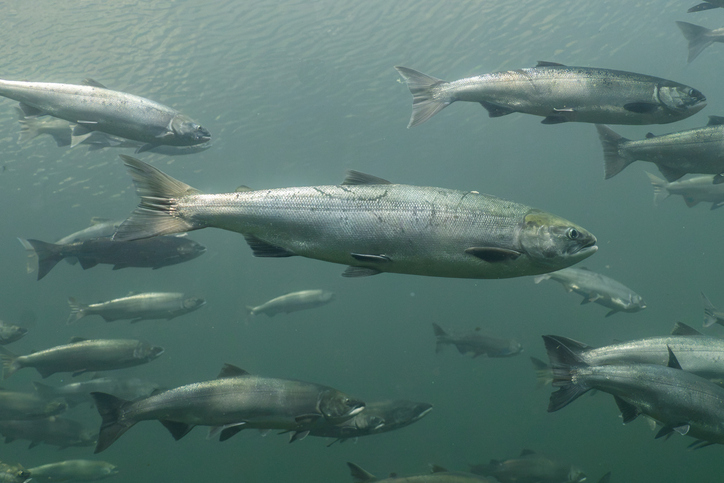
The 2026 Bristol Bay sockeye season is essentially over, and the fish came in under what biologists predicted.
The Alaska Department of Fish and Game had forecast a total run of 45.32 million sockeye supporting a harvest of about 33.5 million. By mid-July the bay-wide run had reached just over 43.2 million fish with the commercial harvest approaching 28.5 million.
The Nushagak district, the bay’s largest, fell furthest behind. Area management biologist Tim Sands said the district’s run finished just over 15 million fish against a forecast of 19 million, with harvest around 9 million against a forecast of nearly 14 million. Two factors compressed the harvest: sockeye arrived early, and the commercial opening was delayed to protect king salmon, so a larger share of the run went upriver as escapement.
King salmon remain the concern. Roughly 35,000 were counted at the sonar, well short of the 55,000 minimum managers target for the Nushagak.
Several systems still met or exceeded their escapement goals, including the Nushagak, Egegik and Ugashik rivers, with the Wood and Kvichak within their target ranges.
Context matters for how this season gets read. The 10-year average run is about 61 million fish, inflated by a record-setting stretch that peaked in 2022 with a 79 million fish run and a harvest above 60 million. The long-term average is closer to 37.4 million. Last year’s run totaled 56.7 million with a harvest of 41.2 million.
Fish size has also been trending down. University of Washington researchers projected average weights between 4.9 and 6.6 pounds this year, and Alaska sockeye have recently averaged around 4.2 pounds, only the fourth time in two decades the statewide average has fallen below five pounds.
Ex-vessel values, the price paid to fishermen at delivery, will not be known until processors finish reporting.